Entrez au coeur du domaine

C'est en Bourgogne que la famille Rousseau travaille depuis 4 générations avec la même passion et les plus beaux terroirs de la côte de Nuits…
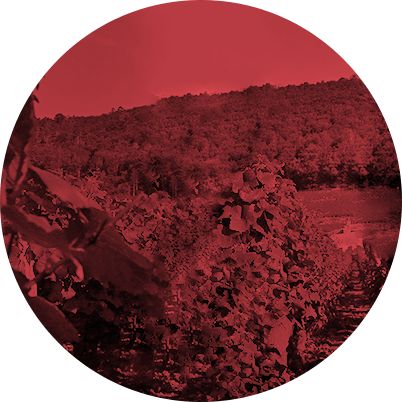
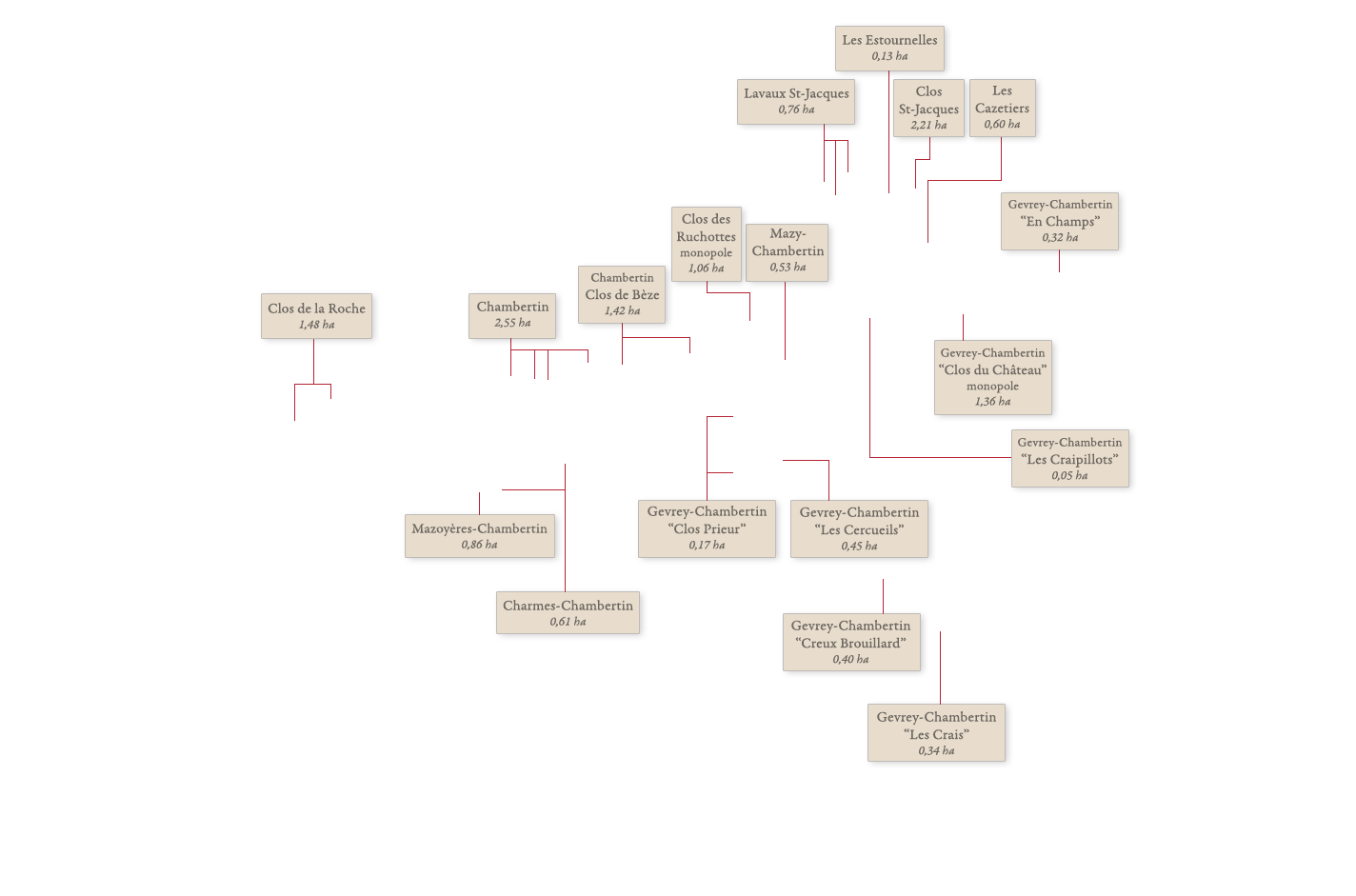
Eric mène le Domaine avec l'aide de sa fille Cyrielle. Au fil des années, le Domaine a grandi et travaille aujourd'hui une surface de 15 hectares 33, dont 3 hectares d'Appellation Village, 3 hectares 77 d'Appellation Premier Cru et 8 hectares 51 d'Appellation Grand Cru, situés sur les territoires de Gevrey-Chambertin et de Morey-Saint-Denis.

Depuis sa création, c’est un rituel qui s’installe comme qui dirait naturellement dans la famille de vignerons : la génération précédente enseigne à la suivante afin qu'elle perpétue un lien étroit entre l'Homme et la vigne ainsi que le travail bien fait. Cette passion pour la vigne renaît encore et encore chez les Rousseau… Ce profond respect du terroir est ancré dans la famille. Découvrez leur histoire...
Le Domaine a été créé au début du XXe siècle par Armand Rousseau qui, à sa majorité, avait hérité de plusieurs parcelles de vigne situées sur la commune de Gevrey-Chambertin. Armand Rousseau était issu d'une famille de petits propriétaires terriens constitués en majorité de vignerons, tonneliers et négociants en vin.
Son mariage en 1909 lui permet d'accroître la superficie de son vignoble et de développer la vente de ses vins par l'apport de vignes supplémentaires et de bâtiments (cave et cuverie). Et ce, à l'endroit où se situe actuellement le Domaine c'est-à-dire dans la plus ancienne partie du village, au pied de l'église du XIIIe siècle.
Armand Rousseau se met à commercialiser ses vins tout d'abord en vrac auprès de négociants régionaux. Puis, très vite, il acquiert de nouvelles parcelles de vignes plus prestigieuses, Charmes-Chambertin, Clos de la Roche puis le fameux Chambertin. Il décide de vendre en bouteilles ses crus les plus renommés en s'adressant à une clientèle de restaurateurs et de particuliers, sous l'égide de Raymond Baudoin, le fondateur de la Revue du Vin de France.
Au fil des années, il continue d'étendre son Domaine avec l'achat de Grands Crus, désormais classés dès 1935 lors de la création de l'Institut des Appellations d'Origine Contrôlée, Mazy-Chambertin, Mazoyères-Chambertin (commercialisé sous l'appellation Charmes-Chambertin). Le Clos Saint Jacques est acquis par la suite au nom de son fils Charles, qui, après avoir effectué des études secondaires classiques et suivi des cours de Droit puis d'Oenologie à l'Université de Dijon, rejoint son père en 1945 pour gérer le Domaine familial.
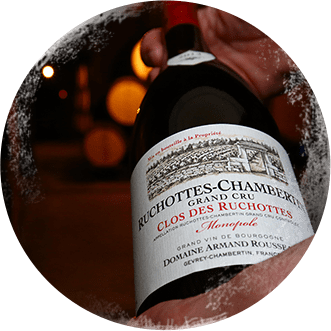
C'est en 1959, à la suite du décès d'Armand Rousseau dans un accident d'automobile à un retour de chasse, que Charles Rousseau se trouve à la tête d'un Domaine de 6 ha qu'il va continuer de développer rapidement grâce à son savoir-faire et en acquérant de nouveaux vignobles, essentiellement dans les Grands Crus, plusieurs parcelles de Chambertin Clos de Bèze, le Clos des Ruchottes en Monopole et du Chambertin dans les années 90.
Parlant couramment anglais et allemand, il décide de se tourner en priorité vers l'exportation, et, après les Etats-Unis où son père avait déjà commencé à commercialiser ses vins au lendemain de la prohibition vers la fin des années 1930, il développe les échanges tout d'abord avec la Grande Bretagne, l'Allemagne et la Suisse, puis il étend sa commercialisation à toute l'Europe, et ensuite au Canada, Australie, Nouvelle Zélande, et enfin en Asie dans les années 1970.
En 1982, Eric, son fils rejoint l'équipe après avoir suivi des études secondaires au Lycée Agricole et Viticole de Mâcon Davayé et une année de spécialisation en œnologie à l'Université de Dijon. Il a également pu étendre ses compétences en travaillant pour des négoces et des cavistes de Bourgogne.
Eric commence dans les vignes. Il applique de nouvelles techniques comme la vendange verte, l'effeuillage, le travail mécanique du sol sans utilisation d'insecticides ou de compléments chimiques. Il oriente le Domaine vers une viticulture plus biologique et s'implique de plus en plus dans la vinification. Il conserve une vinification traditionnelle avec un minimum de manipulations des vins.
En 2014, Cyrielle Rousseau revient définitivement au Domaine pour travailler aux cotés de son père Eric. Après avoir passé un DEUG de Géologie, une Licence de Viticulture et le DTO à Dijon, elle part se forger de l'expérience à l'étranger en participant aux vendanges et vinifications en Oregon, Australie et Nouvelle Zélande tout en s'initiant également au coté commercial chez des cavistes et importateurs.
Elle gère aujourd'hui le domaine avec son père qui lui transmet ses connaissances avec bienveillance pour un jour poursuivre seule la philosophie du domaine tout en garantissant les valeurs si chères à la famille.
Fins, élégants, honnêtes avec une vraie expression du terroir et la patte du vinificateur ; les vins du Domaine sont typiquement bourguignons et fiers de l’être. Bien entendu, ils s'améliorent constemment au cours des années mais ils ont gardé le même fond : « la signature Rousseau ». Garante d'une approche, d'une philosophie, cette famille défend la simplicité dans le travail, l’envie de faire de grands vins dans un seul but : le plaisir de la dégustation sans jamais oublier de toujours chercher à mieux faire.
Des valeurs fortes transmises de génération en génération et qui viennent seulement lorsqu’on est amoureux de ce que l’on fait. Cet amour du travail et du plaisir se retrouve dans chaque bouteille ! Le secret de cette famille réside ici et elle le revendique aujourd'hui haut et fort !

Le Pinot noir, l'instrument pour révéler les grands terroirs.
Le Domaine a jeté son dévolu sur Le Pinot noir, instrument ultime pour révéler les grands terroirs... Entre la famille et ce cépage unique, une passion est née. Natif de Bourgogne, ce cépage très ancien est le père d'un grand nombre de raisins comme le Chardonnay ou le Gamay. À l'origine des plus grands vins rouges de Bourgogne, il est ici le Roi des cépages.
Compliqué à cultiver, il se plaît sur les sols argilo-calcaire et le climat continental septentrional de la Côte de Nuits. Doté d'une palette aromatique remarquable, c'est par sa finesse et sa délicatesse qu'il permet de restituer les subtiles différences et particularités de chaque Climat, exprimant ainsi les nuances distinctives des terroirs. Tous les vins sont différents et ont leur propre personnalité.
L'approche du Domaine réside dans l'amour inconditionnel porté aux terroirs bourguignons. C'est de cette passion que naît le travail bien fait appliqué à chacun des gestes, à chacune des actions, à chacune des étapes de l'élaboration des vins du Domaine.
De par cette vision, enrichie par l'expérience de 4 générations, la famille Rousseau est parvenue à connaître chaque terroir, chaque parcelle, chaque pied de vigne dans les moindres détails.
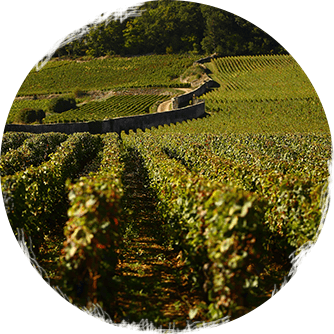
En Bourgogne, les Climats désignent chaque parcelle de vigne.
Identifiés et délimités par les moines il y a plus de mille ans, c'est de par la disparité des expositions, les variations des pentes, les différentes compositions des sols calcaires et les conditions climatiques du millésime que chaque Climat est unique. Le domaine s'est donné pour mission de retranscrire le plus fidèlement la palette aromatique des vins : l'âme de chaque Climat.
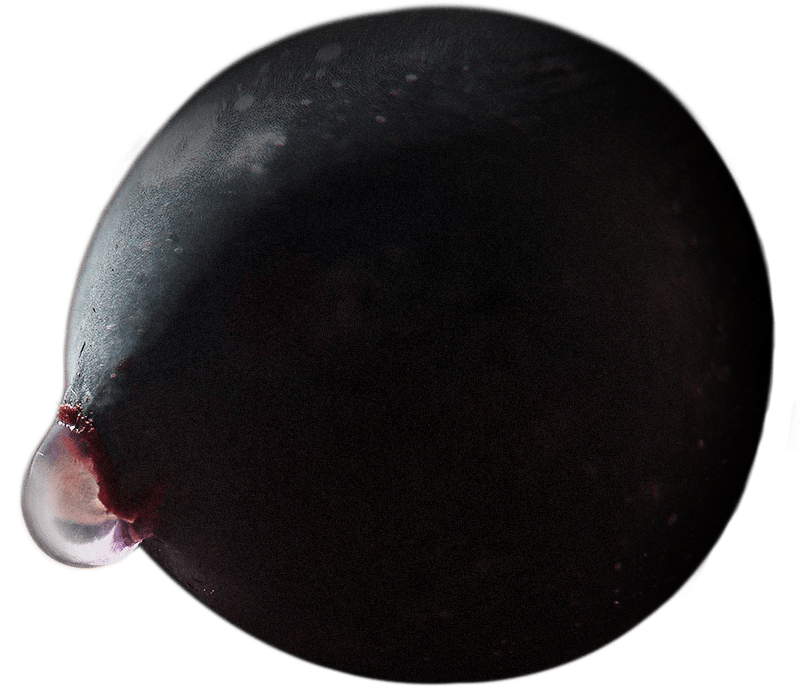
Chaque grain de Pinot noir contient des éléments qui lui sont propres.
Il possède en lui l'identité de son terroir. Chacun d'entre eux est observé, lové et choyé afin qu'il atteigne une maturité phénolique et organoleptique optimales. Alors que la taille Guyot simple est pratiquée sur l'ensemble du vignoble situé sur des côteaux et exposé Est ou Sud-Est sur des sols argilo-calcaires ; le mode de culture des vignes reste traditionnel, avec des rendements de 30 à 40 hectolitres à l'hectare.
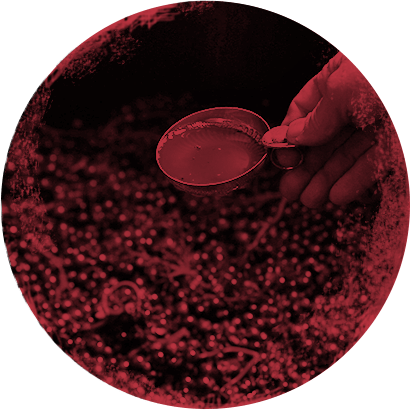
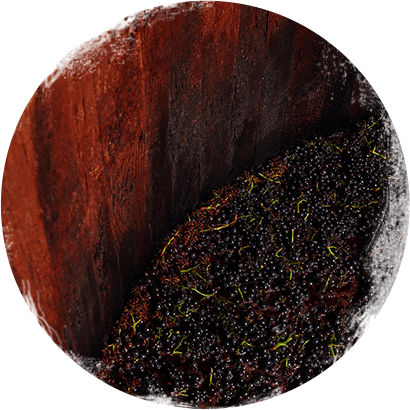
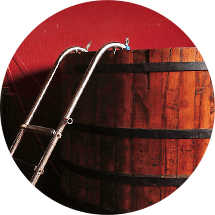
Les méthodes de vinification du Domaine n'ont que très peu changé depuis ses premières vendanges. La même rigeur dans le suivi des étapes de fermentation est toujours de mise.
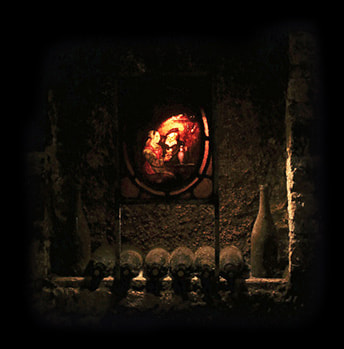
C'est ici que les vins s'élèvent, grandissent et se révèlent petit à petit... Patience et accompagnement sont de mise.
"Suis moi du cœur pour voir encore,
Sur la pente douce du midi,
La vigne qui nous fit éclore
Ramper sur le roc attiédi.
Contemple la maison de pierre,
Dont nos pas usèrent le seuil:
Vois la se vêtir de son lierre
Comme d'un vêtement de deuil.
Ecoute le cri des vendanges
Qui monte du pressoir voisin,
Vois les sentiers rocheux des granges
Rougis par le sang du raisin.
Regarde au pied du toit qui croule:
Voilà, près du figuier séché,
Le cep vivace qui s 'enroule
A l'angle du mur ébréché!"
Après une longue attente, le plaisir est intact. Des vins qui ont une belle structure, une belle intensité, une matière.
L'élégance, la finesse, la pureté en bouche. La seule différence que l'on constate entre les vins vient du Climat et du millésime. La production moyenne est de 63 000 bouteilles par an répartie sur 11 différents vins. Le domaine en exporte 75% dans une trentaine de pays. Le reste est destiné à quelques particuliers, cavistes et restaurants Francais.
Boire nos vins selon le millésime.
Classement des millésimes.
Sélectionnez le millésime de vos bouteilles et découvrez nos recommandations pour une dégustation optimale.
Millésimes donnant des vins fruités et équilibrés, à consommer relativement jeunes
Millésimes de moyenne à longue garde
Millésimes de qualité très belle à exceptionnelle avec puissance et équilibre. De très grande garde
| Appellations | Garde |
1, Rue de l'Aumônerie
21220 Gevrey-Chambertin
Tél. (+33)3 80 34 30 55
Fax : (+33)3 80 58 50 25
contact@domaine-rousseau.com
L'abus d'alcool est dangereux pour la santé, à consommer avec modération | © aneox.com

Êtes-vous né avant le ?
Pour visiter le site www.domaine-rousseau.com, vous devez avoir l’âge légal d’achat dans votre pays de résidence. Pour optimiser l'expérience de navigation, ce site Web utilise des cookies. En cliquant sur OUI, vous acceptez les termes et conditions d'utilisation de ce site.
Les données personnelles relatives aux clients, recueillies par l'intermédiaire des différents formulaires ne sont destinées qu'à un usage exclusif de la société Domaine Armand Rousseau dans le cadre de la mise en œuvre de ses services. La société conserve les données personnelles des utilisateurs sur ses propres serveurs et s'engage à maintenir strictement confidentielles les données personnelles recueillies. Conformément aux dispositions de la Loi n° 78-17 du 6 janvier 1978 relative à l'informatique, aux fichiers et aux libertés, les utilisateurs disposent suivant l'Article 34 de la Loi du 6 janvier 1978 d'un droit d'accès aux données qui les concernent, ainsi que d'un droit de modification et de suppression de celles-ci. Il leur suffit, pour exercer ce droit, d'adresser un courrier postal ou un e-mail à la société Domaine Armand Rousseau aux coordonnées ci-dessous :
Domaine Armand Rousseau
1 Rue de l'Aumônerie,
21220 Gevrey-Chambertin
Tél +33 (0)3 80 34 30 55
email : contact@domaine-rousseau.com
Le présent site constitue une œuvre dont la société Domaine Armand Rousseau est l'auteur au sens des articles L.111.1 et suivants du Code de la propriété intellectuelle. Les photographies, textes, slogans, dessins, images, séquences animées sonores ou non ainsi que toutes œuvres intégrés dans le site sont la propriété de la société Domaine Armand Rousseau ou de tiers ayant autorisé la société Domaine Armand Rousseau à les utiliser.
Les reproductions, sur un support papier ou informatique, dudit site et des œuvres qui y sont reproduits sont autorisées sous réserve qu'elles soient strictement réservées à un usage personnel excluant tout usage à des fins publicitaires et/ou commerciales et/ou d'information et/ou qu'elles soient conformes aux dispositions de l'article L122-5 du Code de la Propriété Intellectuelle.
A l'exception des dispositions ci-dessus, toute reproduction, représentation, utilisation ou modification, par quelque procédé que ce soit et sur quelque support que ce soit, de tout ou partie du site, de tout ou partie des différentes œuvres qui le composent, sans avoir obtenu l'autorisation préalable de la société Domaine Armand Rousseau est strictement interdite et constitue un délit de contrefaçon.